
Vietnamese Consumers in the Digital Economy: How Has the Purchase Journey Changed?
Explore Vietnamese consumer behaviour in 2026 within the digital economy and how businesses can design omnichannel journeys that build trust and drive conversion.
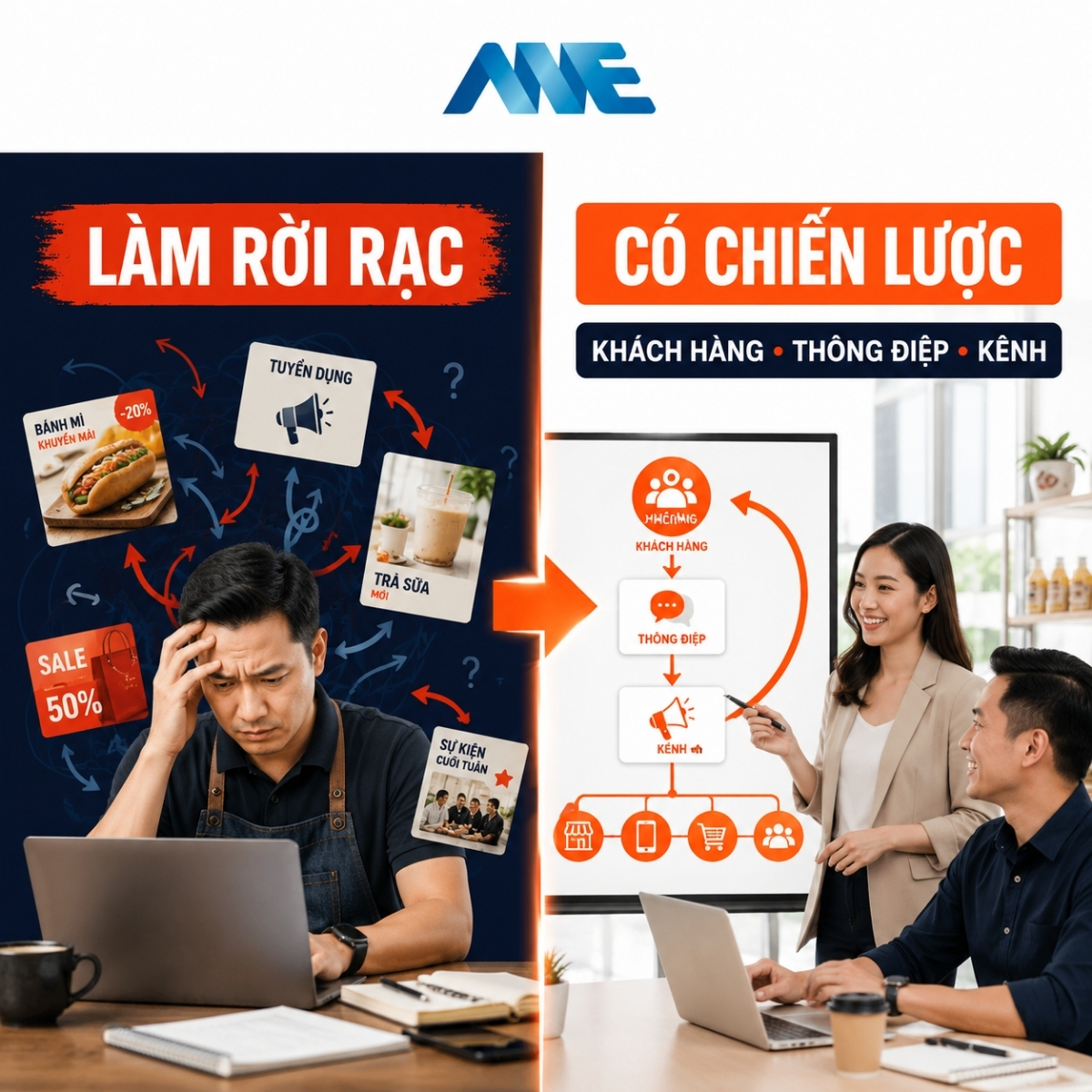
How has the purchase journey changed?
Customers no longer travel in a straight line from advertisement to purchase. They watch videos, search, read reviews, ask communities and buy through the most convenient channel. Against a fast-changing market backdrop, this article analyses the impact, identifies the trends and offers a practical roadmap for Vietnamese businesses.
The digital economy is expanding, yet attention is increasingly scarce
Vietnam's digital economy remains among the fastest growing in the region. The e-Conomy SEA 2025 report estimates Vietnam's digital economy at around USD 39 billion in gross merchandise value, while regulators note that e-commerce continues to grow at a high rate. Digital infrastructure, e-payments, logistics and mobile phone habits allow businesses to reach a far wider market than the traditional store model. However, when every brand can appear on social media, the scarcest resources become attention and trust.
Consumers see hundreds of messages every day. They have learned to skip generic content, exaggerated advertising and inauthentic imagery. Digital competition is therefore not merely about buying more impressions. Businesses need to understand the usage context of each channel. Short video is suited to creating discovery; search engines address intent-driven needs; websites help verify capability; communities and reviews reduce perceived risk; messaging and consulting teams help finalise the decision.
The customer journey is no longer a straight line
The traditional funnel model is still a useful way to think, but actual behaviour is more complex. A customer may watch a video without buying, then see a KOC's post, search the brand name on Google, visit the website to read the policies, return to Facebook to read comments and finally send a message. For high-value products, the journey stretches across many conversations and many people influencing the decision. This makes attributing all revenue to the "last click" a likely path to poor decisions.
Businesses should manage the journey by touchpoint and by task. Discovery touchpoints need to capture attention and establish relevance. Consideration touchpoints need to explain, compare and provide evidence. Conversion touchpoints need to reduce friction: short forms, clear pricing information, fast responses and an appropriate call to action. Post-purchase touchpoints need to affirm the choice, guide usage and open the way to reviews, repeat purchases or referrals.
Trend 2: From mass content to contextual experiences
The second trend is contextual personalisation rather than simply inserting a customer's name into a message. Context includes need, region, timing, device type, traffic source, interaction history and purchase stage. Someone searching for "a hotel near the airport tonight" needs different information from someone planning a family holiday three months out. A factory director needs different operational evidence from a small shop owner.
Businesses can start simply by building content clusters by intent. The research group needs how-to articles and answers. The comparison group needs criteria tables, case studies and reviews. The purchase-ready group needs clear service packages, processes, timelines and commitments. The existing-customer group needs guidance, care and return offers. This approach creates a sense of the right person at the right time without yet requiring an overly complex technology stack.
Trust becomes a competitive advantage
In a digital environment, customers cannot easily inspect the product or the people behind the brand. Trust is therefore built from many small signals: consistent company information, a clear address, real imagery, transparent policies, responsible replies, authentic reviews and content that demonstrates professional expertise. These signals do not create an instant surge, but they lift conversion rates across the entire journey.
The 2025 E-Commerce Law, effective from 1 July 2026, raises requirements around seller identification, platform responsibility, livestreaming, KOL/KOC, consumer protection and data. For marketers, compliance is not only a legal department matter. How information is presented, which influencers are chosen, how claims are substantiated and how data is managed all become part of brand credibility. The more transparent a business is, the greater its advantage as the market gradually weeds out irresponsible selling models.
Designing a content system around the journey
An effective content system can be divided into five streams. The problem stream helps customers recognise a need. The knowledge stream helps them understand selection criteria. The evidence stream covers projects, processes, behind-the-scenes material, reviews and verifiable results. The product stream presents solution packages, value and terms. The brand stream tells the story of people, culture and point of view to build long-term relationships.
Every piece of content needs one task and one next step. A discovery video can invite viewers to save it or read a detailed article. An SEO article can lead to a calculator, a checklist or a service page. A case study can lead to booking a consultation. Post-purchase content can lead to a review or a referral programme. Linked this way, a business no longer posts on impulse but builds a content network that supports sales.
Omnichannel does not mean copying one piece of content
Businesses often make the mistake of posting the same design and the same caption across every platform. Brand consistency does not mean content uniformity. Each channel has different usage behaviour. TikTok and Reels need fast pacing, a clear character and a strong opening. Facebook suits storytelling, community and discussion. YouTube suits in-depth explanation and long-term search. LinkedIn suits professional perspectives, B2B and leadership branding. The website is where you own content, data and conversion.
The right strategy is one core idea adapted to context. For example, the theme "reducing OTA dependence" can become a 30-second video stating the pain point, an SEO article on building a direct booking channel, an infographic comparing costs, a livestream Q&A and a landing page for consultation sign-ups. The same theme, but each format performs a different task.
Measure the journey rather than only individual channels
Businesses should build a measurement system that is fit for purpose, starting with traffic source, content viewed, information-submission actions, consultation status and revenue. UTM codes, forms with a source field, campaign-specific phone numbers, CRM and "how did you hear about us" surveys can help assemble the picture. The data will not be perfect, but consistency matters more than complexity.
When evaluating, look at both early and late indicators. Quality views, completion rates, branded search and return visits are early signals. Leads, quotations, orders, repeat purchases and referrals are late outcomes. Looking only at final revenue makes it hard to know what needs fixing. Looking only at engagement makes it easy to mistake attention for purchase intent.
Conclusion
Vietnamese consumers now live within a purchase journey that is multi-touchpoint, information-rich and speed-demanding. The winning business is not necessarily the one that appears most often, but the brand that creates the most seamless experience: easy to discover, quick to verify, clear in its advice and strong in its aftercare.
AME Marketing can help businesses map the customer journey, build an intent-based content system, standardise channels and connect data with sales. The goal is to turn every touchpoint into a step closer to trust, conversion and a long-term relationship.
Real-world scenario and implementation checklist
A practical way to picture the new journey is to put yourself in the buyer's shoes. In the morning, they see an experience-sharing video on TikTok but take no action. At noon, they search the brand name on Google, read reviews and compare it with two other options. In the evening, they return to Facebook to read comments, then send a message asking about policies. If a business measures only the last click, the video that opened the journey will be undervalued; if it looks only at views, the team will not know whether the content generated genuine demand. Reporting must therefore connect discovery, consideration, conversation and order metrics.
The most common mistake is copying the same content onto every channel without adjusting its role. TikTok and Reels are suited to capturing attention quickly; the website is suited to full explanation and trust-building; Google Maps supports location-based needs; email or Zalo is better suited to nurturing and aftercare. The core message must be consistent, but the storytelling must adapt to context. A 30-second video should not carry the burden of a long service page, while a service page should not be written like a social media caption.
SMEs can start with a very compact journey map: where customers become aware, what evidence they need to believe, what objections they raise before buying and how they need to be cared for after the transaction. For each question, assign one piece of content, one touchpoint and one owner. For instance, a problem-solving video builds awareness; case studies and price lists support consideration; a consultation script handles objections; a post-purchase message sequence encourages return. Once the links are connected, marketing is no longer a collection of disconnected posts.
Within 90 days, the first month should go to customer research, standardising foundational data and fixing touchpoints that erode trust. The second month deploys three content groups covering problem, evidence and product, while testing two to three advertising messages. The third month focuses on the segments showing good signals, builds re-engagement scripts and measures the lead-to-order rate. Each week needs only one short meeting between marketing and sales to update new questions, lead quality and the reasons opportunities were lost.
The pre-publication checklist includes: does the headline match search intent; is brand information consistent; is the promise backed by evidence; does the landing page load well on mobile; is the contact button easy to see; do staff know the lead source; does the system record consent to receive information; and can reporting be traced back from revenue to campaign. These are small details, but they determine the overall experience. A brand is not formed by one perfect moment, but by the many times a customer receives a consistent signal.
Frequently asked questions
Does a business need to be present on every platform?
No. Choose channels based on where customers research and make decisions, while ensuring the business owns at least one core platform such as a website and its customer data.
Does personalisation require major technology?
Not necessarily. You can start by segmenting by need, traffic source and purchase stage, then build corresponding content and response scripts.
Which touchpoint matters most?
The touchpoint that most reduces risk in the purchase decision is usually the most important. Depending on the industry, that could be reviews, consultation, trials, policies or proof of expertise.
Is your business looking to define its market, build positioning, develop platforms or optimise conversion? AME Marketing accompanies you from analysis, strategy, content and media to advertising and measurement. Contact AME to receive an implementation roadmap suited to your objectives, resources and stage of growth.
References
Google, Temasek, Bain & Company, Vietnam e-Conomy SEA 2025: https://services.google.com/fh/files/misc/vietnam_e_conomy_sea_2025_report.pdf
Institute for Industry and Trade Strategy and Policy Research, the 2025 E-Commerce Law effective from 1 July 2026: https://vioit.moit.gov.vn/vn/tin-hoat-dong-nganh/luat-thuong-mai-dien-tu-2025-co-hieu-luc-tu-1-7-2026-6816.4056.html